Model routing and resilience
A product that depends on one model provider inherits its outages, its rate limits and its prices. Enterprises also have data that must not leave the network, and teams that want to try a cheaper model without rewriting the integration.
Because every provider is behind the same chatbot interface, routing becomes a small function: pick the provider per request, fall back when one fails, keep private traffic on premise, and measure the candidates before switching.
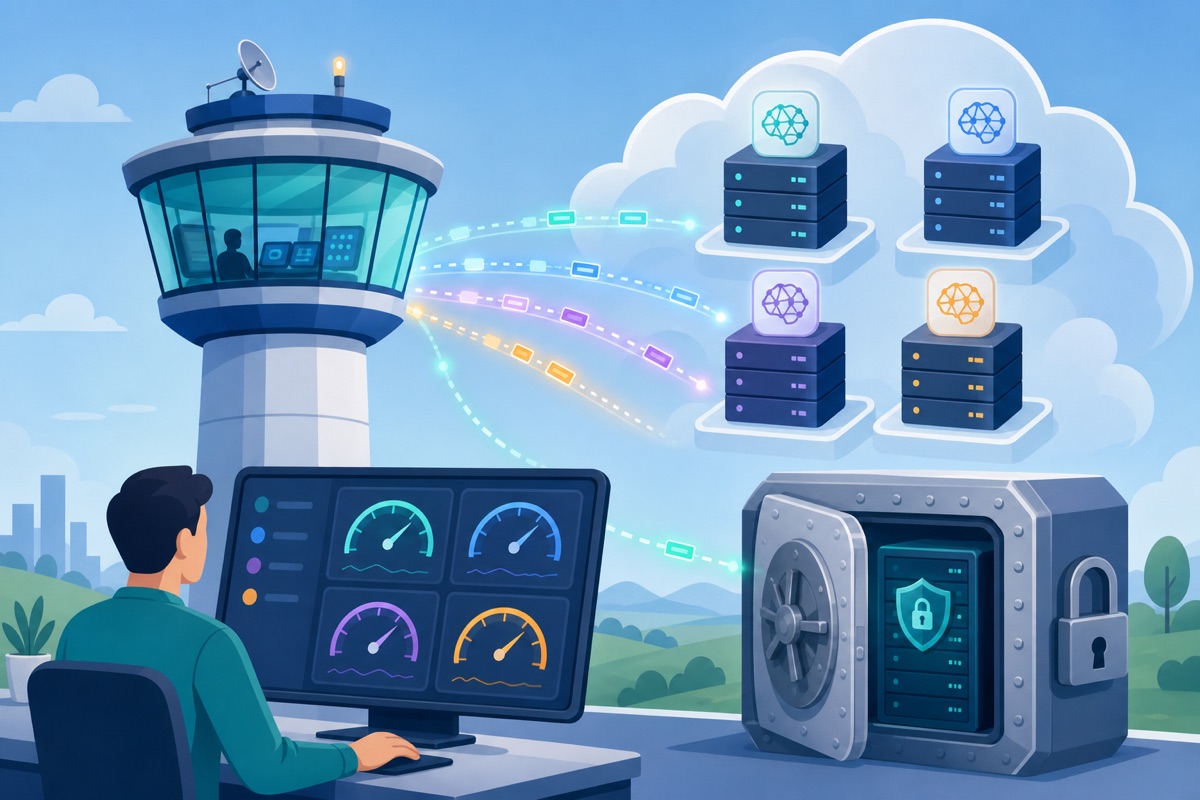
1. One place that creates chatbots
Keep the provider choice in a registry. Timeouts and retries are set once here and apply to every request.
const { Chatbot, SupportedChatModels } = require('intellinode');

const REQUEST = { timeout: 30000, retries: 2, retryDelay: 500 };

const providers = {
  quality: () => new Chatbot(process.env.ANTHROPIC_API_KEY, SupportedChatModels.ANTHROPIC, null, REQUEST),
  fast: () => new Chatbot(process.env.OPENAI_API_KEY, SupportedChatModels.OPENAI, null, REQUEST),
  cheap: () => new Chatbot(process.env.OPENROUTER_API_KEY, 'openrouter', null, { ...REQUEST, model: 'meta-llama/llama-4-maverick' }),
  private: () => new Chatbot(null, 'ollama', null, { ...REQUEST, model: 'qwen3', timeout: 120000 }),
};
Chatbot.createInput(provider, system, options) returns the right input class, so the routing code never mentions ChatGPTInput or AnthropicInput:
async function ask(lane, system, question) {
  const bot = providers[lane]();
  const input = Chatbot.createInput(bot.provider, system, { maxTokens: 2048 });
  input.addUserMessage(question);
  const [reply] = await bot.chat(input);
  return reply;
}
2. Route by policy
function laneFor(request) {
  if (request.containsPersonalData) return 'private';   // never leaves the network
  if (request.task === 'summarize' || request.task === 'classify') return 'cheap';
  if (request.task === 'draft_contract') return 'quality';
  return 'fast';
}

const answer = await ask(laneFor(request), 'You are a helpful assistant.', request.text);
3. Fall back in order
Errors carry the HTTP status and a code for timeouts, so the fallback only triggers for problems on the provider side.
const ORDER = ['fast', 'quality', 'cheap'];

function isProviderProblem(error) {
  return error.code === 'ETIMEDOUT' || error.status === 429 || (error.status && error.status >= 500);
}

async function askWithFallback(system, question) {
  let lastError;
  for (const lane of ORDER) {
    try {
      return await ask(lane, system, question);
    } catch (error) {
      if (!isProviderProblem(error)) throw error;
      lastError = error;
      console.warn(`${lane} unavailable (${error.status || error.code}), trying the next lane`);
    }
  }
  throw lastError;
}
4. Cancel what the user no longer waits for
A request that outlives its web request should stop consuming tokens. Pass the same AbortSignal to the chatbot.
app.post('/assist', async (req, res) => {
  const controller = new AbortController();
  req.on('close', () => controller.abort());

  const bot = new Chatbot(process.env.OPENAI_API_KEY, 'openai', null, { ...REQUEST, signal: controller.signal });
  const input = Chatbot.createInput('openai', 'You are a helpful assistant.');
  input.addUserMessage(req.body.question);

  res.setHeader('Content-Type', 'text/plain');
  for await (const chunk of bot.stream(input)) res.write(chunk);
  res.end();
});
5. Measure before you switch
LLMEvaluation runs the same prompts on several providers and scores the answers against the expected ones, so the cheaper lane is a decision, not a guess.
const { LLMEvaluation } = require('intellinode');

const evaluation = new LLMEvaluation(process.env.OPENAI_API_KEY, 'openai');

const results = await evaluation.compareModels(
  'Explain what a rate limit is in one sentence.',
  ['A rate limit caps how many requests a client may send in a period of time.'],
  [
    { apiKey: process.env.OPENAI_API_KEY, provider: 'openai', type: 'chat', model: 'gpt-5.5' },
    { apiKey: process.env.ANTHROPIC_API_KEY, provider: 'anthropic', type: 'chat', model: 'claude-sonnet-5' },
    { apiKey: process.env.MISTRAL_API_KEY, provider: 'mistral', type: 'chat', model: 'mistral-medium-latest' },
  ],
);
console.log(results);
Why it helps
- One integration, every provider: switching models is configuration, not a rewrite.
- Outages and rate limits degrade to the next lane instead of failing the product.
- Private data has a lane that never leaves the network, on the same code path as the rest.